How Does Controlling the New Animals Work in Rust?
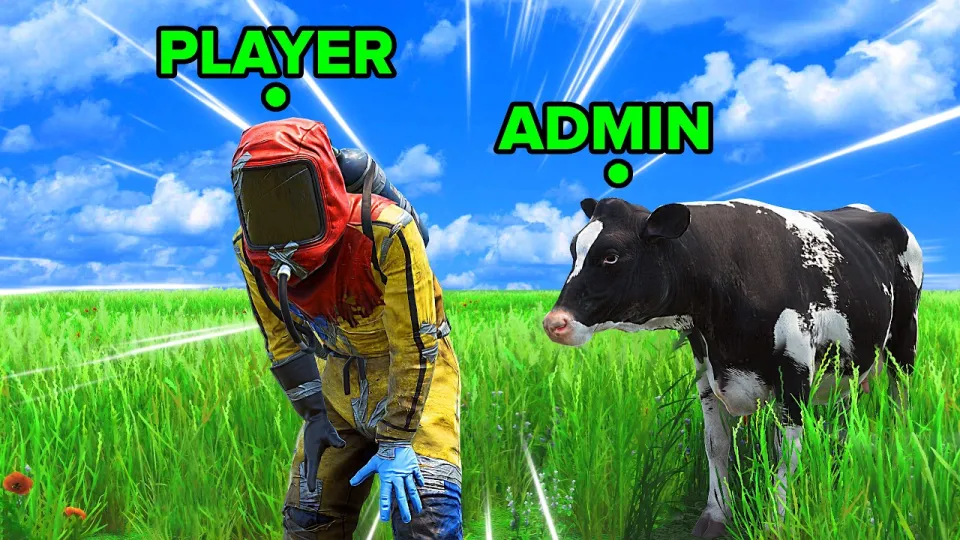
Video: Controlling The NEW Animals In Rust - Admin Trolling
Want articles like this for your own video to promote it on YouTube and Google? Order them through the Telegram bot @sat_sit_bot. The bot writes and publishes the articles itself (with your YouTube video embedded) on popular topical websites (no ads). Try it free: 50 articles on us.
Key takeaways
- Rust's animal roster expanded with cows, bulls, turtles, frogs, crabs, squirrels and sheep alongside the classic bears, boars, pigs, wolves, chickens and horses.
- Enardo and Lucas Battle run the trolling on Enardo's own one-grid random-farming and 10x servers, not on official Rust.
- Admins can possess and move animals, rename them, scale them up and spawn them in bulk, which is how the cow swarm and giant crab bits were made.
- The 'weeping angel' bit uses an animal that only moves while players are not looking at it, freezing in place when observed.
- Animal trolling works because wildlife in Rust is normally harmless background noise, so players drop their guard around it.
Controlling the new animals in Rust means an admin takes over a spawned creature, moves it like a player and uses it to interact with survivors: following them, blocking doors, standing still until they look away, or spawning dozens of copies at once. In Enardo's admin trolling video with Lucas Battle, that toolkit is aimed at players on his own one-grid random-farming and 10x servers, where a cow can be renamed, resized and multiplied until a farmer is surrounded by ten of them. The display gear used in the intro is available through Displate's sale link, which takes 22% off one plate, 27% off two and 33% off three or more.
What animals are in Rust after the wildlife update?
Rust's wildlife pool is much wider than the bears, boars, pigs, wolves and chickens that older players remember. The current roster includes:
- Farm animals — cows and bulls, which are large, slow and easy to rename, making them the natural pick for comedy.
- Small critters — squirrels, frogs and turtles, useful when an admin wants something that fits under a door or sits on a player's head.
- Coastal and water creatures — crabs and sharks, with the crab's size being adjustable enough that viewers immediately suggested scaling one up to double a player's height.
- Classic threats — bears, boars and wolves, which still deal real damage and can be spawned as a genuine hazard rather than a joke.
- Mounts — horses, which remain the main transport animal and are the one case where players usually want an animal nearby.
Because most of these creatures are neutral or passive, they read as scenery. That is exactly what makes them useful for trolling: nobody expects a turtle to have a personality.
How does admin possession of animals actually work?
Admin possession lets a staff member detach control from their own character and drive a creature directly. On a server where the admin has the right permissions, the practical steps are straightforward:
- Spawn the animal with the admin spawn command, choosing the species from the updated list.
- Take control of it so movement, look direction and proximity follow the admin's input instead of the animal AI.
- Rename it, since a named animal shows its name to nearby players and turns a random cow into a character.
- Adjust scale and spawn count to go from one odd-looking creature to a herd.
- Release control and let the AI take over again if the bit needs the animal to wander off on its own.
This is why the video's best moments are not about combat. A player chopping wood turns around to find a cow called by a human name standing at arm's length, or a turtle that keeps repositioning itself whenever they stop watching. The Russian-speaking players in the clip get their own treatment: one is told he looks French enough that a frog might eat him, and a turtle encounter turns into a short interrogation about which turtle he is.
What is the weeping angel animal trick in Rust?
The weeping angel trick copies the Doctor Who monster: the creature only moves while nobody is looking at it. In practice an admin positions an animal behind a player, freezes it the moment the player's camera turns toward it, and advances again the instant the player looks away. Done with a cow or a bull, the effect is that a large animal silently closes distance across an open field without ever appearing to move.
It works because Rust's first-person camera gives the admin a clean line of sight to judge when a player is watching. The trick needs no plugins beyond possession and a way to hold the animal still, and it is far more effective in open terrain than inside a base, where walls break the line of sight. Viewers picked this out as the strongest idea in the video and suggested the same behaviour could be built into scarecrows, which would make it a permanent map feature rather than an admin gag.
What did the cow swarm and other animal pranks look like?
Most of the trolling relies on volume and repetition rather than cleverness. The standout bit is a swarm of ten cows dropped around a single player, which the audience rated as the funniest moment of the run. Other setups include:
- A giant crab scaled up until it towers over a survivor, the logical next step after the crab model proved resizable.
- Animals parked in doorways and narrow corridors so a player has to physically push past them.
- A creature placed to stare at a player from a distance while a second admin lines up a shot, which is the source of the "sniper behind you" moment in the opening.
- Named animals used as bait, since a player who stops to read a name is a player who is standing still.
One detail that got more attention than expected: the amount of modelling work on the cow, including anatomy nobody needed. The takeaway for anyone planning the same stunt is that spawning a few strange animals and letting players notice them is more unsettling than filling the screen with copies.
Where can you watch and play with these settings?
Everything in the video runs on Enardo's own servers, which are listed at https://enardo.gg and include the one-grid random-farming setup and the 10x rates server used for the trolling. The same community runs a Discord at https://discord.gg/enardo, a merch store at https://enardo.store, and live streams at https://www.twitch.tv/enardo. Lucas Battle, the second admin in the video, co-hosts the session.
Players who want to try animal possession themselves need admin rights on a private or community server; official Rust servers do not hand out spawn or possession commands. A local test server is the safest place to learn the scale and rename commands before using them in front of an audience.
What do viewers still ask about animal trolling?
Two recurring doubts come up around these videos. The first is whether spawning animals is a bannable offence — on servers where the admin is the owner and the players know the rules, it is an event, not cheating; on an official server, any admin-style spawn is impossible without exploits. The second is whether the animals are new models or reskins. The cow, bull, turtle, frog, crab, squirrel and sheep are distinct creatures with their own models and animations, which is why the cow's detail drew comments at all.
A third theme is restraint. Several viewers felt the bits land harder when the admin creeps players out first and only escalates to a full herd afterwards, because the joke is the player's confusion rather than the number of entities on screen.
Conclusion
Animal possession turns Rust's most harmless content into a prank tool, and Enardo's session with Lucas Battle shows the range: renamed cows, a weeping angel stalker, a giant crab and a ten-cow ambush on one farmer. The techniques are simple — spawn, possess, rename, scale, repeat — but they work because wildlife is the one part of the game players never treat as a threat. If you want the display gear from the intro, the Displate sale page carries the 22%/27%/33% bundle discounts. More admin experiments and server events come from Enardo, the channel behind this breakdown.
Source: Controlling The NEW Animals In Rust - Admin Trolling · Markdown version
Questions & answers
Can regular players control animals in Rust?
No. Possession and spawning are admin commands, so they only work on a server where you hold staff permissions, such as your own hosted server. On official servers there is no legitimate way to take over a cow or spawn a herd, and attempting it through exploits risks a ban.
Are the new animals in Rust hostile?
Most of them are not. Cows, bulls, sheep, squirrels, frogs, turtles and crabs are passive or neutral and will not chase a player, while bears, boars and wolves still attack and can kill an unaware survivor. That difference is why passive animals make good trolling material — players simply do not react to them.
What is the weeping angel trick in Rust?
It is an admin prank where a possessed animal only advances while the player is not looking at it and freezes the moment it enters their view. The result is a creature that appears to teleport closer each time the player turns around, mimicking the statues from Doctor Who.
Do I need mods to rename or resize an animal?
No plugins are required beyond standard admin rights. Renaming and scaling are built into the admin toolset, so a server owner can make a cow called by a human name or a crab twice a player's height without installing anything extra.